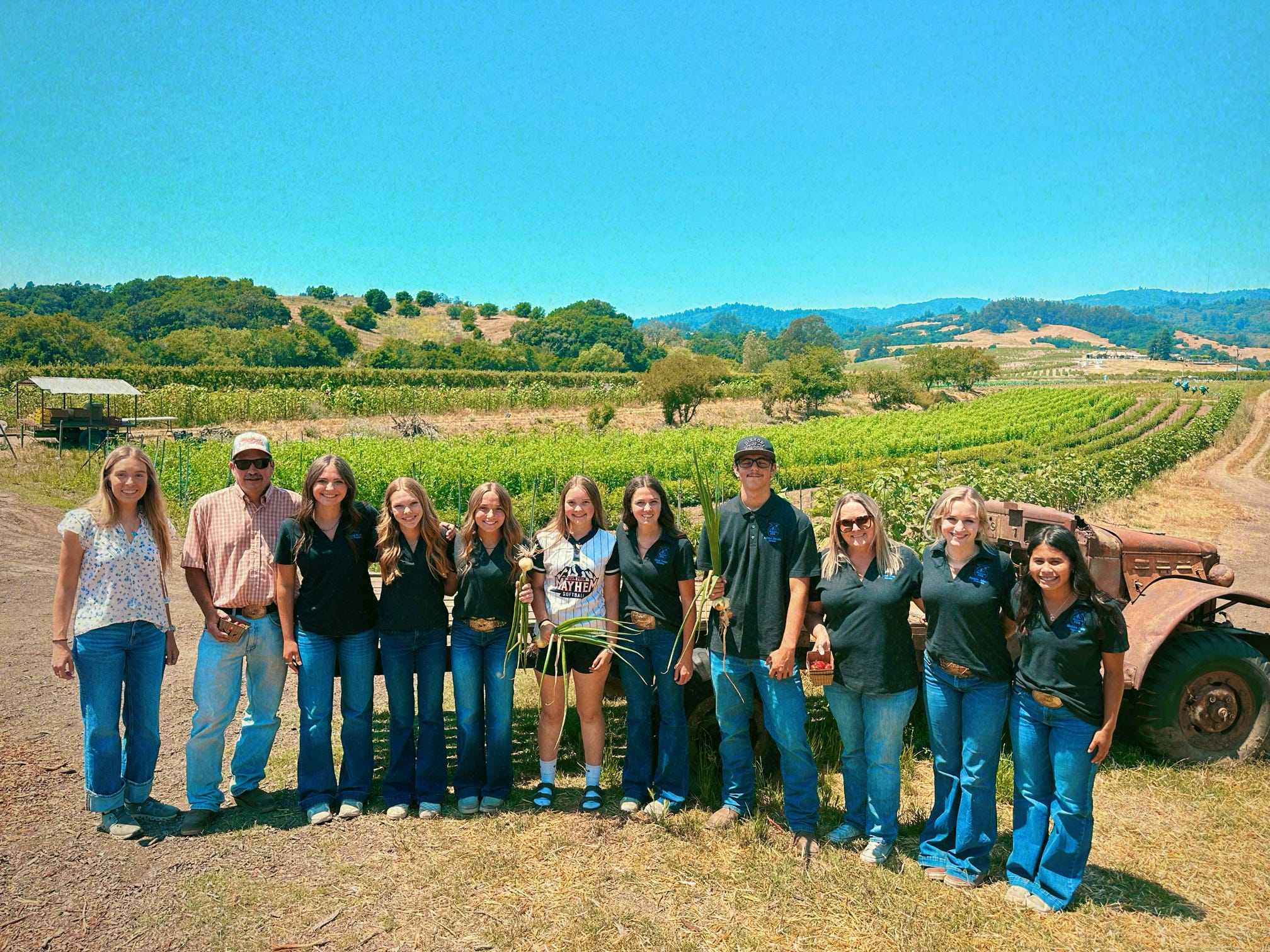
Maggie Swanson, Ag Teacher at Mariposa High School
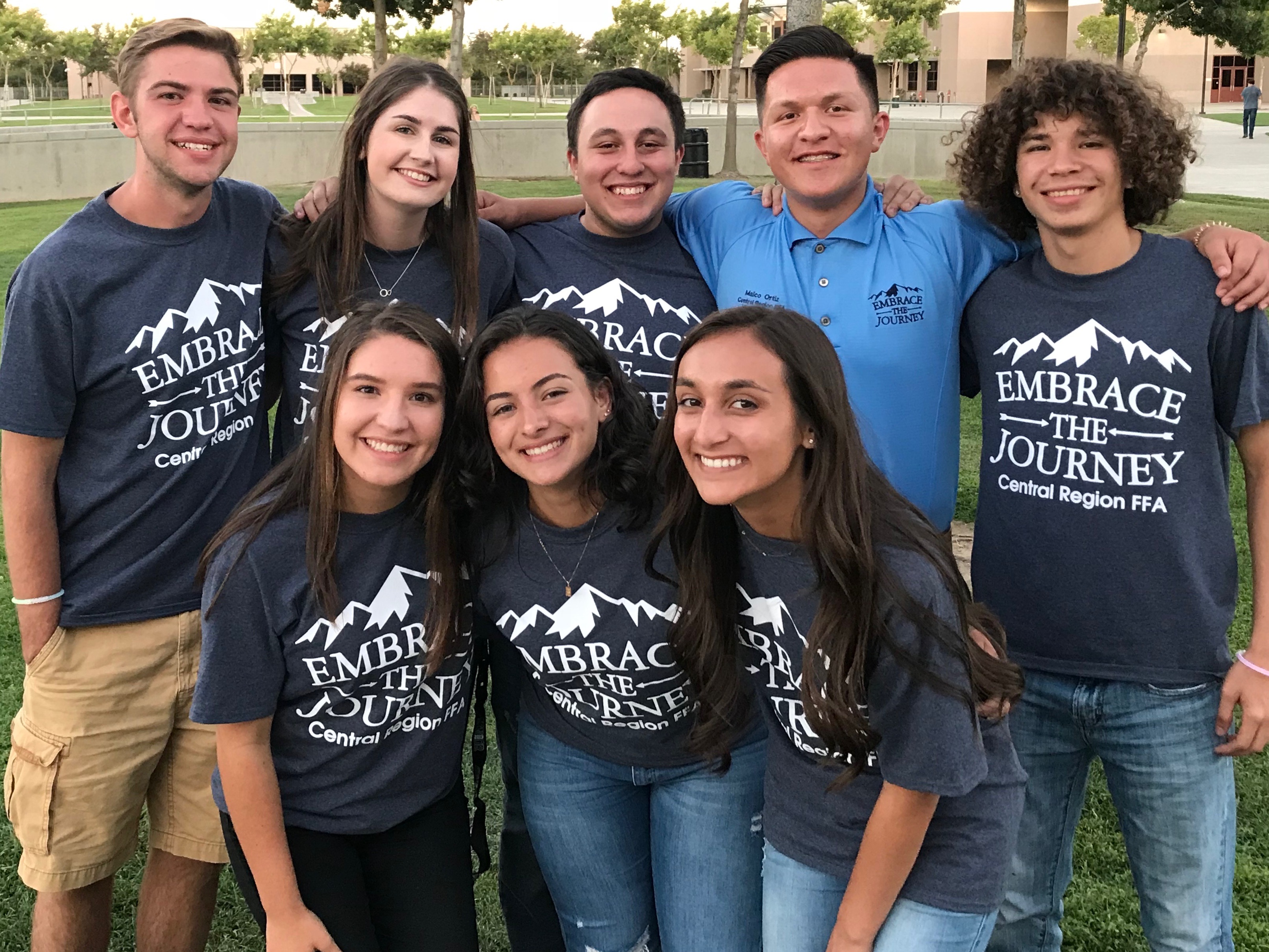
Former FFA Chapter: Dixon FFA, Class of 2019 (Maggie is pictured at far left)
1. What was your path to becoming an ag teacher?
I grew up raising several species of livestock and was heavily involved in 4-H and FFA. These experiences truly shaped me into who I am and who I am as an ag teacher. I went on to attend Cal Poly, San Luis Obispo, where I majored in Dairy Science and Agricultural Communication. My time there helped me deepen my understanding of the agriculture industry and confirm my path to becoming an ag teacher.
2. What inspired you to pursue agricultural education as a career?
In high school, I knew I wanted to pursue a career in education. I had always been passionate about learning, but it was the impact of my ag teachers that truly set my path. They created a place where I felt supported, challenged, and capable. I strive to do the same for my own students by creating meaningful opportunities and helping them discover their passions.
3. What do you enjoy most about teaching agriculture?
I enjoy that no day is ever the same. Agriculture blends science, creativity, leadership, problem-solving, and hands-on learning every single day. Teaching ag feels purposeful because the skills students learn have real-world value. Knowing that what I teach helps them become capable, responsible, and knowledgeable individuals makes this work incredibly rewarding.
4. What is one classroom or FFA moment this year that reminded you why this work matters?
A highlight this year was seeing my project competition students excel in their skills and projects. One student developed a business proposal for the clipping business she started, and it perfectly reflected why I invest extra hours to help students apply what they learn. It was rewarding to see her highlight her business to judges and share how she will continue to expand the business in the future.
5. How did your own FFA experience influence the teacher you are today?
My FFA experience taught me the value of stepping up, pushing myself outside my comfort zone, and leading by example. Those lessons shape how I teach today. I focus on creating opportunities for students to build confidence, take on leadership roles, and strengthen their skills. I want them to leave my classroom with both practical and life skills that will serve them well in any career.
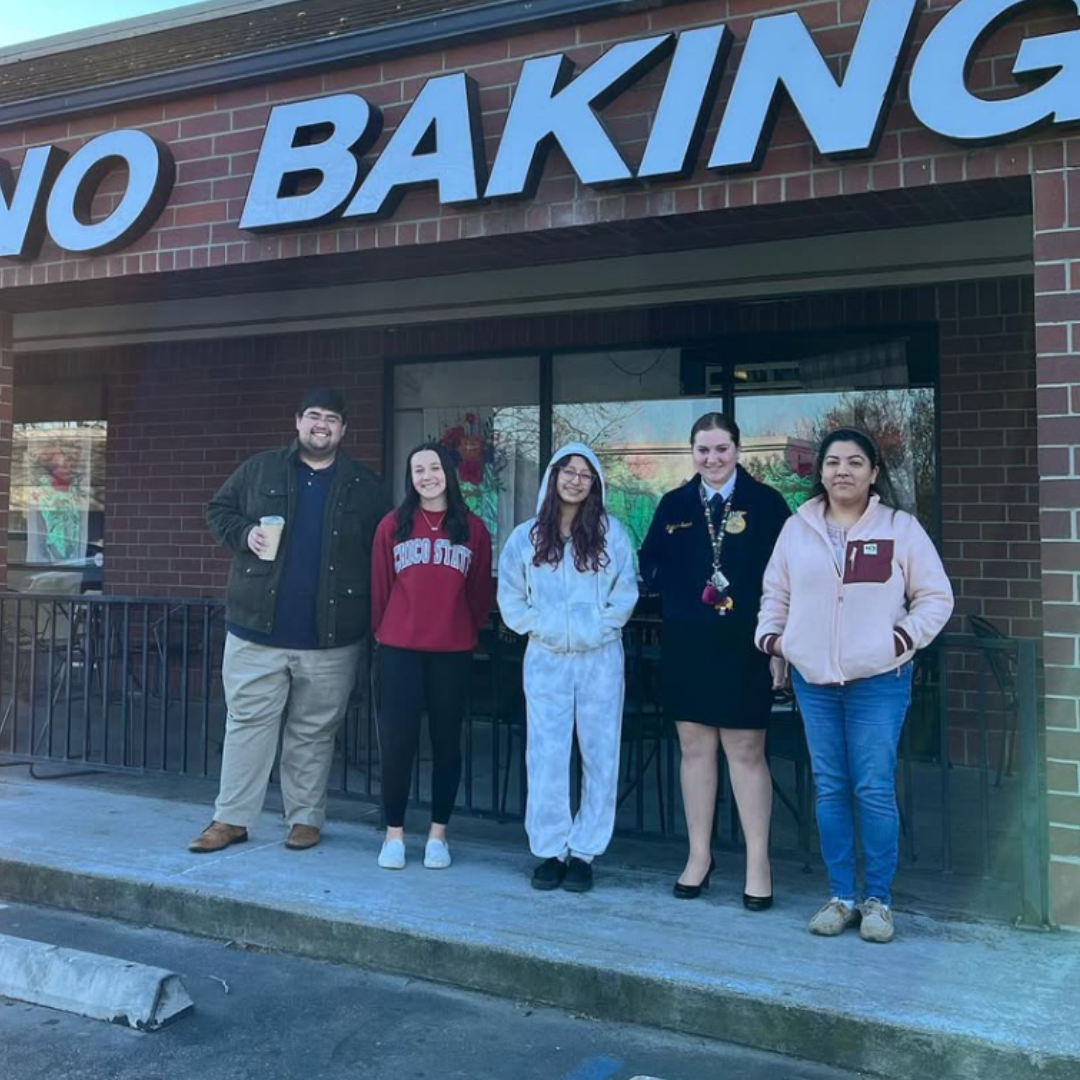
Steven Khansefid, Ag Teacher at Joseph Kerr Middle School in Elk Grove
Former FFA Chapter: Elk Grove FFA, Class of 2012 (Steven is pictured at far left)
1. What was your path to becoming an ag teacher?
My path was unconventional. I began at Cosumnes River College and Sacramento City College before transferring to UC Davis to study Animal Science and Management with an emphasis in Avian Science. After graduating, I completed prerequisite coursework through Chico State and UC San Diego Extension, ultimately returning to UC Davis for my credential and master’s program.
2. What inspired you to pursue agricultural education as a career?
I chose ag education because I wanted a meaningful career that pushed me to grow personally and professionally. FFA transformed me from a shy student into a confident leader, and I hoped to provide that same opportunity for future students.
3. What do you enjoy most about teaching agriculture?
I enjoy learning beyond the traditional classroom—whether in the shop, garden, greenhouse, farm, or at leadership events. Those hands-on moments are where students make real connections and lasting memories that textbooks can’t provide.
4. What is one classroom or FFA moment this year that reminded you why this work matters?
During our pig unit, students were fully engaged and surprised by how much there is to learn beyond “pigs make bacon.” Watching their curiosity grow and misconceptions shift reminded me how impactful agricultural education can be.
5. How did your own FFA experience influence the teacher you are today?
FFA taught me leadership, responsibility, and the value of supportive mentors. Those lessons guide me to foster a positive, student-focused environment where every student feels capable, included, and encouraged to lead.